
The Language That Shapes Kokerboom
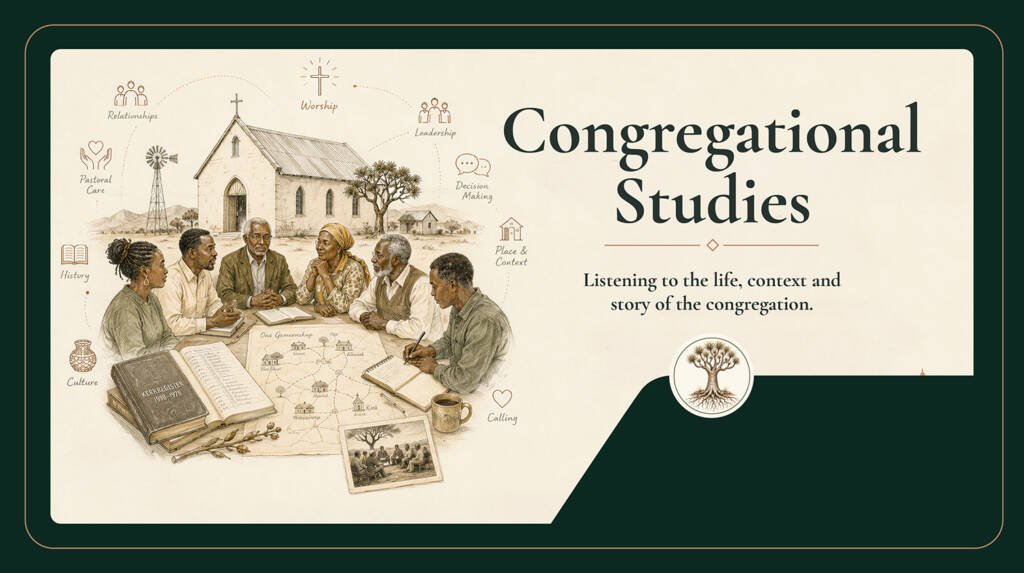
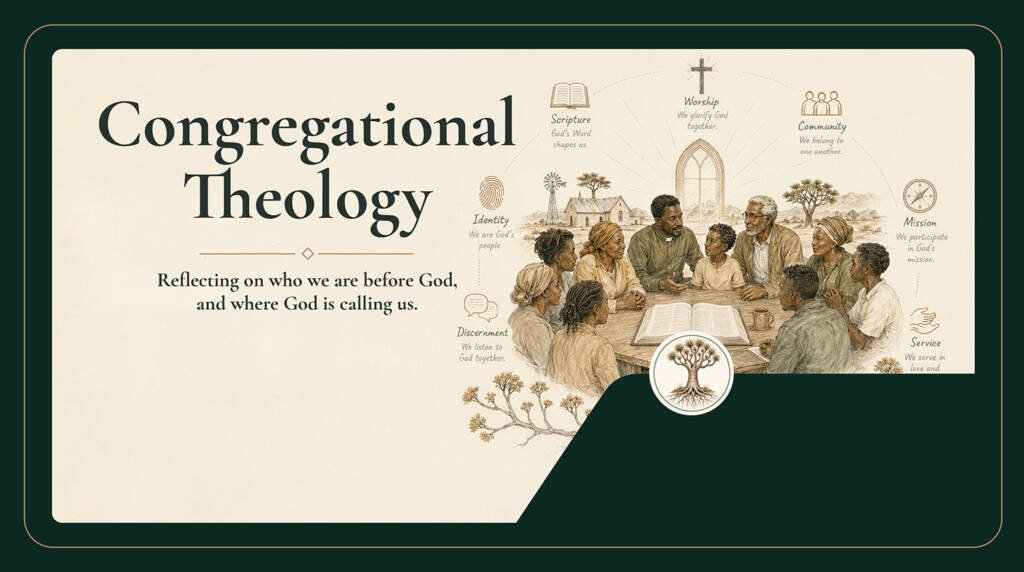
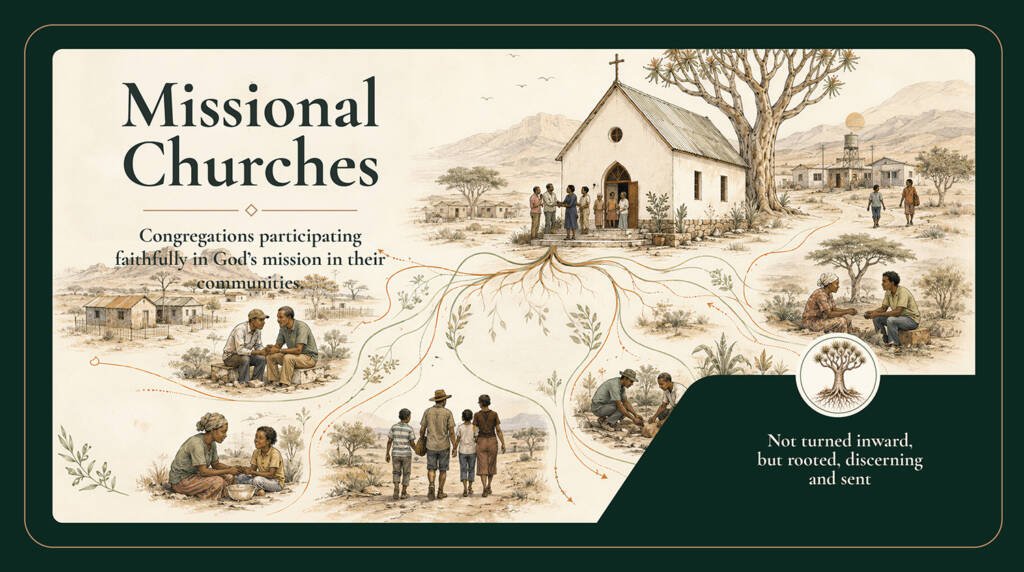
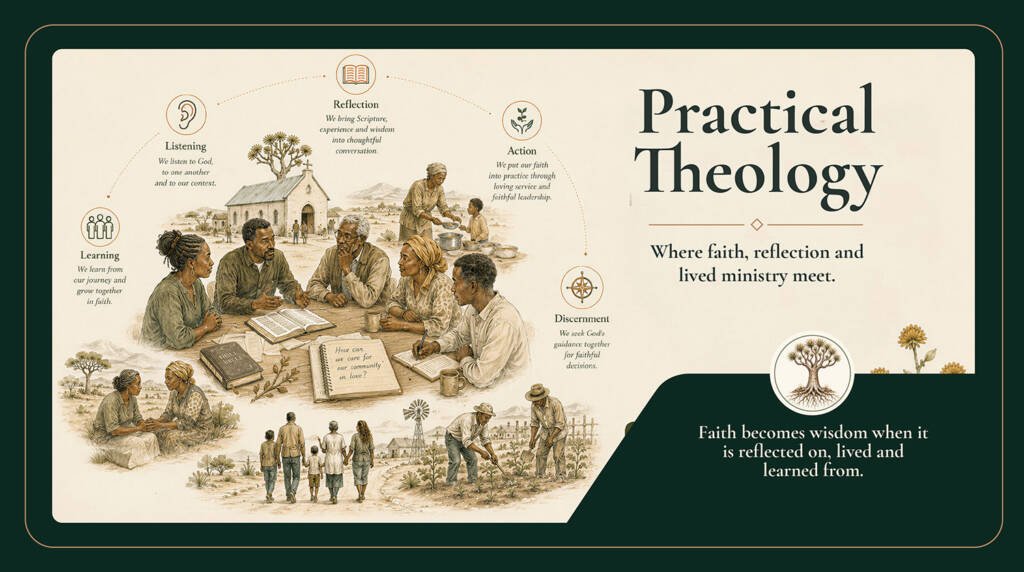
Congregational studies is the attentive study of a congregation as a living community of faith—its history, worship, leadership, relationships, culture, community presence, context and God-given calling.
For Kokerboom, this work does not begin with ready-made answers or prescribed solutions. It begins with listening and discernment: listening to the congregation’s story, recognising its gifts and wounds, and paying careful attention to how God may already be at work within its life and community.
Kokerboom draws on practical theologian Richard R. Osmer’s framework in Practical Theology: An Introduction. His four questions guide congregations from careful observation towards faithful response:
Richard Osmer's framework is one of the most widely used approaches in practical theology. In his book Practical Theology: An Introduction, he proposes four core questions that guide theological reflection and ministry practice.
- What is going on? (Descriptive-Empirical Task)
- This question seeks to understand a situation or context.
- It involves gathering information through observation, interviews, surveys, or other research methods.
- Example: Why is church attendance declining among young adults?
- Why is this going on? (Interpretive Task)
- This question explores the reasons behind what is happening.
- It draws on insights from theology as well as disciplines such as sociology, psychology, anthropology, and history.
- Example: What social, cultural, or spiritual factors contribute to declining church attendance?
- What ought to be going on? (Normative Task)
- This question considers what should happen in light of Scripture, Christian tradition, theology, and ethical principles.
- It asks what God's will or biblical teaching suggests about the situation.
- Example: What does the Bible teach about Christian community and discipleship?
- How might we respond? (Pragmatic Task)
- This question focuses on practical action.
- It develops strategies and interventions to improve or transform the situation.
- Example: What ministries, programs, or leadership practices could encourage greater engagement among young adults?
- What is going on? (Descriptive-Empirical Task)
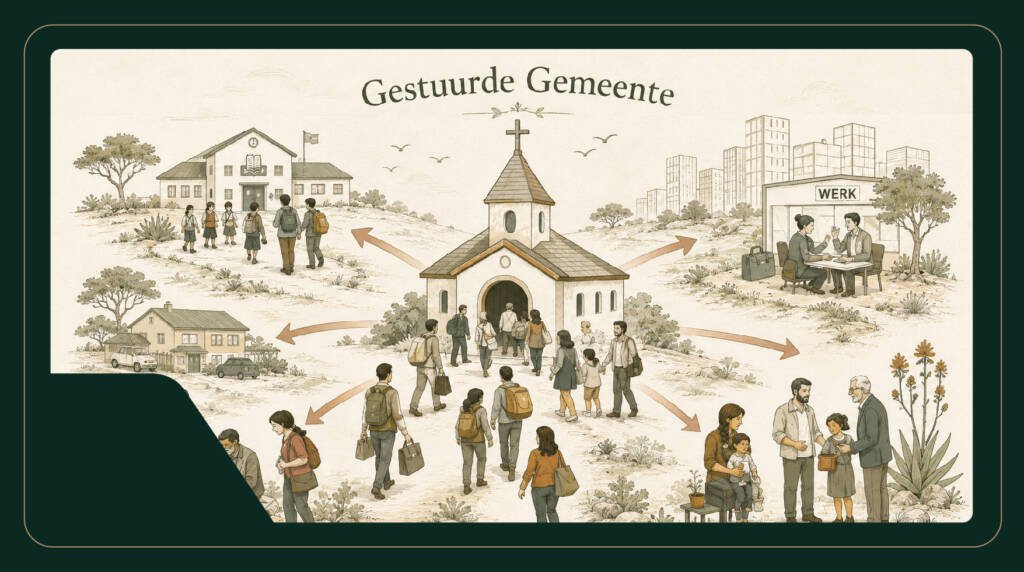
Congregational theology asks how a congregation understands God, itself, its context and its calling. It helps churches reflect on who they are before God and how they may participate faithfully in the Missio Dei.
Congregational development is not simply church growth. It is the process of helping congregations grow in health, clarity, wisdom, relationships, discernment and faithful participation in God’s mission.
Mark Lau Branson is a leading contemporary practical theologian whose work focuses on missional leadership, congregational transformation, community engagement, and multicultural ministry. He understands practical theology as a process of helping churches discern what God is doing in their local context and participate faithfully in God's mission (missio Dei).
Mark Lau Branson's understanding of practical theology
Branson views practical theology as more than applying theological ideas to ministry. Instead, it is a continuous cycle of action, reflection, and discernment in which churches:
- Listen carefully to their communities.
- Reflect on Scripture and Christian tradition.
- Discern God's activity.
- Respond through faithful ministry and mission.
Key themes in Branson's practical theology
- Missional orientation: The church exists to participate in God's mission rather than simply preserve its own programs and traditions.
- Contextual theology: Ministry should respond to the unique cultural, social, and historical realities of each community.
- Communal discernment: Leadership is not only the work of pastors; the whole congregation participates in discerning God's direction.
- Praxis: Practical theology follows a rhythm of experience, theological reflection, and renewed action, allowing ministry to be continually reshaped.
Overall, Mark Lau Branson's practical theology emphasizes participation in God's mission, contextual discernment, collaborative leadership, and ongoing theological reflection that leads to faithful action.
Kokerboom aligns itself with the understanding of practical theology described by Prof. Mark Lau Branson. This approach encourages congregations to reflect carefully on their lived experience, their context and their participation in God’s work.
This understanding is explored in Churches, Cultures, and Leadership: A Practical Theology of Congregations and Ethnicities, co-authored by Mark Lau Branson and Juan F. Martínez.
Nelus Niemandt is a South African theologian known for his work on the missional church, leadership, and the theology of the Dutch Reformed Church. His understanding of the missional church is shaped by the idea that the church participates in God's mission (missio Dei) rather than creating its own mission.
Nelus Niemandt's definition of a missional church
While Niemandt expresses the concept in several ways across his writings, the core elements of his definition are:
A missional church is a community of disciples sent by God to participate in the missio Dei, embodying and witnessing to the reign of God within its local context through the power of the Holy Spirit.
Key characteristics in Niemandt's work include:
- God is the source of mission. Mission originates with God (missio Dei), not with the church.
- The church is sent. The church exists because God sends it into the world.
- Contextual engagement. Missional churches discern what God is doing in their local communities and join in that work.
- Disciple-making. Every believer is a missionary disciple, not just clergy or missionaries.
- Incarnational presence. The church lives among people, demonstrating the gospel in word and deed.
- Transformation. The goal is participation in God's renewal of creation, not merely church growth.
Nelus Niemandt's definition of missional leadership
Niemandt describes missional leadership as leadership that equips God's people to participate in God's mission. A concise summary of his perspective is:
Missional leadership is the practice of discerning God's activity, forming communities of missionary disciples, and equipping the church to participate faithfully in God's mission within its specific context.
Important dimensions of missional leadership in his work are:
- Discernment: Leaders help congregations recognize where God is already at work.
- Servant leadership: Leadership is relational, collaborative, and empowering rather than controlling.
- Adaptive leadership: Leaders guide churches through change and uncertainty.
- Formation: The focus is on shaping disciples who live missionally in everyday life.
- Innovation: Leaders encourage experimentation and responsiveness to changing contexts.
- Spirit-led leadership: Decisions are grounded in prayer, Scripture, and attentiveness to the Holy Spirit.
This understanding is explored further in his book Missional Leadership.
Kokerboom’s understanding of theology is shaped by the work of Prof. H. Jurgens Hendriks, as presented in his book Studying Congregations in Africa. Theology is understood as a faithful and contextual process of listening, reflection and discernment through which congregations seek to understand God’s work within their life, community and context.
According to H. Jurgens Hendriks, theology is not merely the academic study of God. He defines theology as a process of spiritual discernment in which believers seek to understand God, God's will, and God's mission in the world.
In his 2007 article Missional Theology and Social Development, Hendriks writes:
"A missional theology believes that theology is about discernment (Philippians 1:9–10)."
He further explains that theology is:
- A dialogue between God, Scripture, the church, and the contemporary world.
- Faith seeking understanding, where believers participate in God's mission (missio Dei) rather than merely studying God from a distance.
- A way of knowing God, discerning God's will, and participating in God's missional work.
A concise definition based on Hendriks' work is:
"Theology is the process of discerning God, understanding His will through Scripture and context, and participating in His mission in the world."
This definition reflects Hendriks' emphasis that theology is both reflective and practical—it involves understanding God and living out that understanding in service and mission.
In Studying Congregations in Africa, Hendriks does not present theology as a simple one-sentence definition. Instead, he explains what theology is through a set of foundational principles. His central definition is:
"Theology is about God: to know God, to discern God's will and guidance for the way we should live and witness."
In the book (especially around p. 24), Hendriks explains that theology is:
- About God—its primary purpose is to know God and discern God's will.
- About the community of faith—the church participates in God's mission (missio Dei).
- Contextual—theology is done within a particular time, place, and culture, responding to real-life issues.
- Missional and practical—theology is not only about knowledge but also about faithful action in the world.
A concise summary of Hendriks' understanding is:
"Theology is about knowing God, discerning God's will, and participating with the community of faith in God's mission within a specific context."