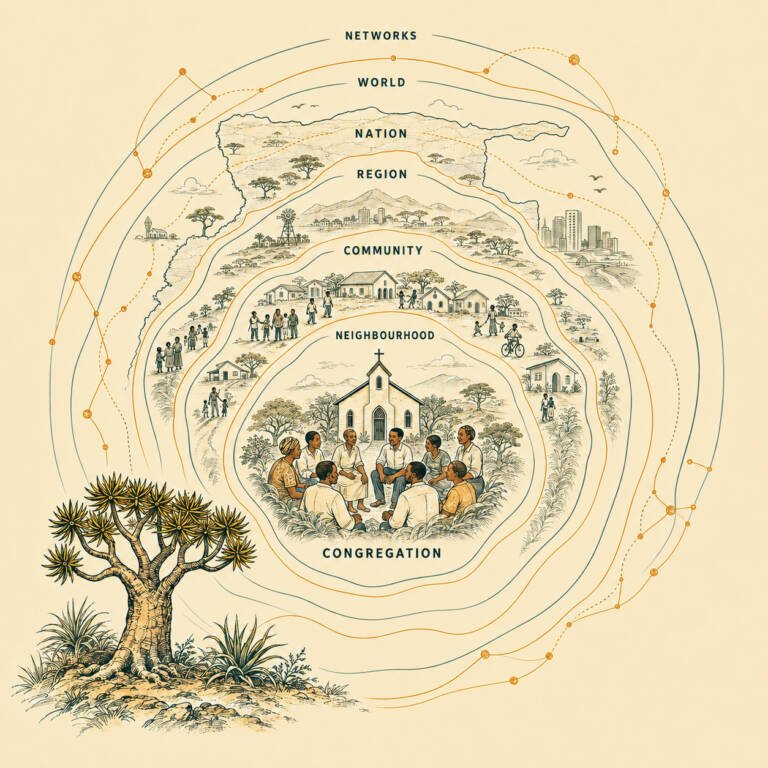
Understanding how decisions and ideas move through a congregation
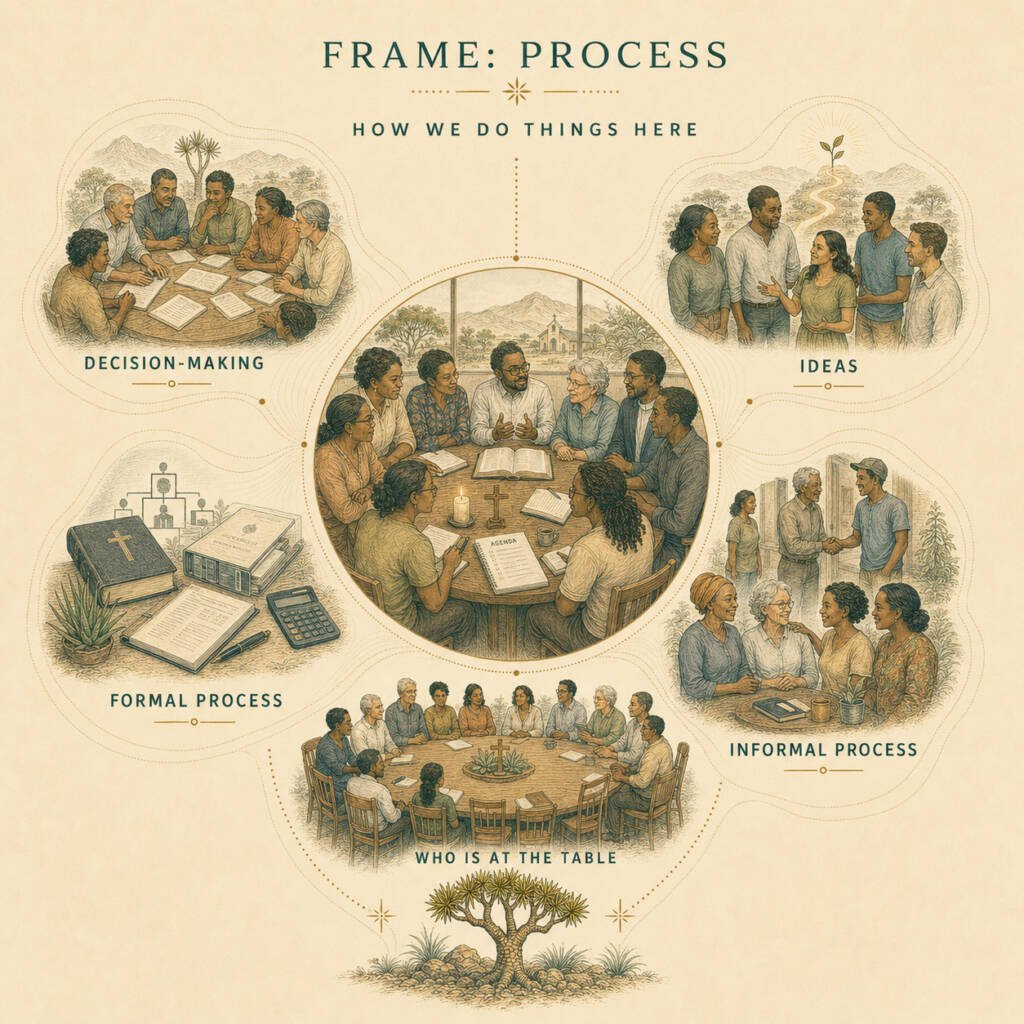
The process frame helps congregations understand how decisions are made, how ideas move and who is included at the table. It reveals both the formal and informal ways a congregation organises itself for worship, leadership, care and mission.
This frame is about understanding “how we do things around here.” Shaped by their very nature as voluntary associations, congregations organize themselves through a variety of formal and informal processes.
Who decides, how ideas move, and who is at the table
(A) Decision-making.
Congregations make decisions both big and small. Understanding how it goes about this process of decision-making is reflective of a congregation’s traditions, social setting and the people themselves. When decisions are made, pay attention to the decision making table.
(B) Ideas.
Speaking of decisions, how are new ideas brought to the table? Do they come from a centralized authority, from a visionary pastor or local board, or from the collective brainstorming of the members? How are new ideas vetted and how are they implemented?
(C) Formal Process.
When considering a congregation’s processes, it’s helpful to notice both the formal and the informal processes. Formal processes are prescribed and explicit. Their logics and structures are often explained in official documents such as constitutions. Examples: Tax-exempt financial arrangements, staff policies for hiring and evaluation, budgets, and hiring (calling) a new religious leader.
(D) Informal Process
Informal processes are those that are assumed, implicit, or perhaps they take place behind the scenes. Which processes are formalized and which are left to informal, self-organizing can vary significantly. Some examples might include: welcoming new members, how to get involved, or starting a new program.
(E) Who’s at the table?
Just like any activity of a congregation, its important to notice who’s at the table and who is not when a congregation is making a decision. Some congregations have large staff who run the day to day operations of the congregation. Others rely on volunteers. Some congregations share decision making widely, while others concentrate that authority to just a small group of members.
The Frame In Action
Kokerboom draws on the congregational study frameworks presented in Studying Congregations: A New Handbook, co-edited by Professor Nancy T. Ammerman, a leading scholar in the sociology of religion. These frameworks help congregations listen carefully to their theology, ecology, culture, processes and resources.

Ecology Frame

Theology Frame

Culture Frame