
Using Photos And Videos
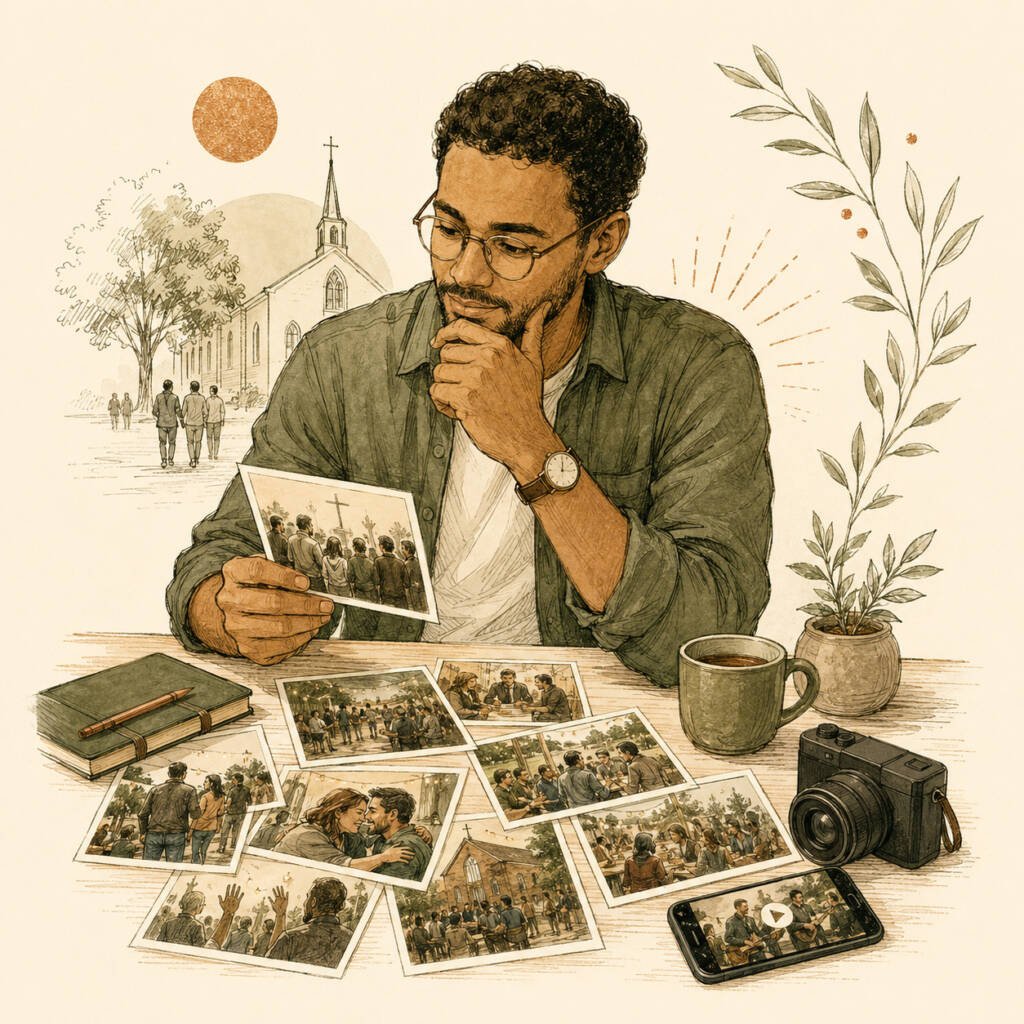
Using photos and videos offers another way to collect, analyze, and present information about congregations. Sometimes called “Visual Research Methods,” this way of understanding a congregation treats photographs, film, video, print media, digital media, maps, and drawings as data. Photos and videos can be created by you, someone else in the congregation, or a creative professional.
Learning from Pictures
Using photos can help you understand many aspects of a congregation’s life. It might be an aspect of people’s everyday experience that isn’t east to observe, but would help you understand program successes or underlying needs or the meanings of important places. These methods have been explored in a series of posts in our Fieldnotes and are linked below.
Images for Program evaluation. Participants can document before, during, and after images related to a program’s desired outcomes. How did it show up in daily life or in congregational activities? Read more here.
Images for Understanding. Photos can allow new insight into how an elusive subject is understood and experienced by a congregation. A salient question can be posed to a group, challenging them to photograph places or objects that illustrate that theme. Where do they see the congregation changing? Or, where do they experience divine presence, for example? As they share their photos, their stories can uncover important meanings. Read more here and also here.
Images of Context. Photos can also help a congregation better understand its own building or its neighborhood. Facing important decisions about how a building is used, photos taken by members can be the start for key conversations. When they take pictures of the places that are most important to them – and tell those stories – decision makers have important information to guide them. Similarly, when trying to understand how a congregation fits in its neighborhood, walking the streets and taking photos is a great way to start. Read more here.
- Identify or gather a group. It can be a preexisting group, like a Bible study or group of volunteers. Or you may want to invite an intentionally diverse group that doesn’t usually talk to each other.
- Set out the question. Make it broad enough to tease their imagination. For example: Photograph five places in this building that are especially meaningful to you and three places you don’t like. Or – Snap images that capture the way this neighborhood is changing. This article is especially helpful for thinking about how to ask good questions.
- Remember to be respectful. Remind participants not to be intrusive and not to photograph an identifiable person without their permission. Look here for a full discussion of the ethics of visual research.
- Tell the stories. Whatever your purpose, the power in this is allowing participants to tell the stories that go with their pictures. In a group setting, each person’s photos can elicit responses from others. And participants themselves can identify themes. In some cases you might also want to create a public display from selected photos so that the group can tell their stories more broadly.
- Analyze the results. Researchers will also want to record and transcribe these interviews and conversations so that a careful analysis can yield a reliable reading of the themes involved.